
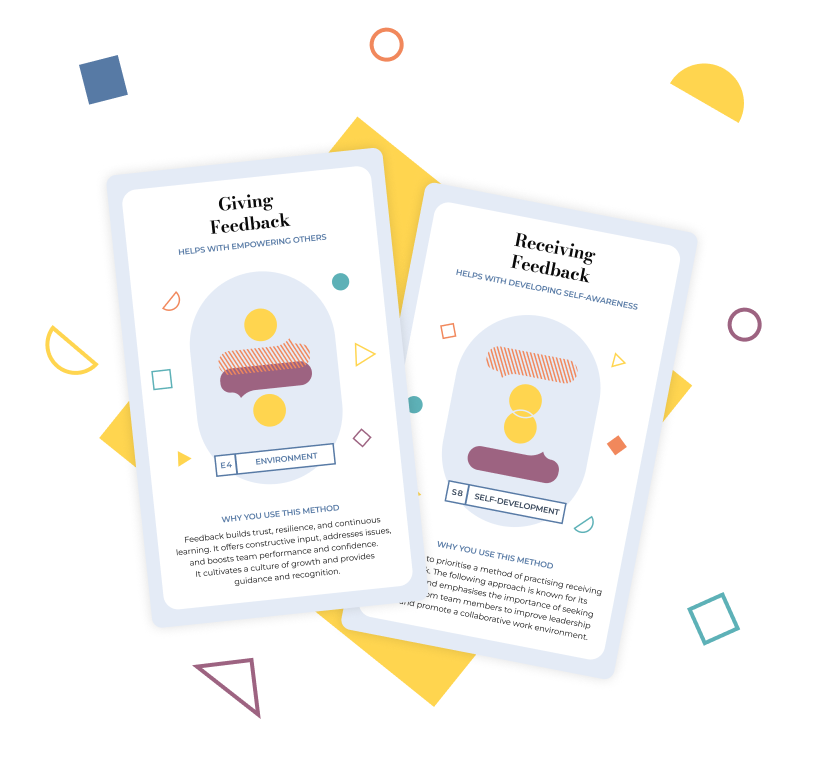
How to get people ready to hear it - and make it easier on everyone
You know the moment. You've been rehearsing it in the shower for three days. You finally catch them in the corridor, take a breath and say, "Have you got a minute?" - and watch their face drain of colour as they mentally update their CV.
Here's what most of us get wrong about feedback: we obsess over what we're going to say and forget to check whether the other person is in any state to hear it. The best feedback comes from an invitation, checking that someone is open to listening rather than ambushing them with your gift.
So before you give, get them ready to receive. Here's how.
Step One: Get Your Own Head Straight First
Before anything else, ask yourself: what do I actually want to change?
Is this about a specific behaviour, or a general vibe?
Do I have a real example - or just a feeling?
What does "better" look like?
If you can't answer those in a sentence or two, you're not ready. Feedback that starts with "you just seem a bit… off lately" ends with two confused people and no plan.
Step Two: Make Feedback Normal, Not an Event
If the only time you give feedback is when something's gone wrong, every "can we have a chat?" will sound like a summons to the headteacher's office. Build the habit little and often - and include the good stuff. When feedback is part of the weekly rhythm, the tricky bits stop feeling like a trapdoor opening.
Step Three: Ask Before You Give
Simple, but it changes everything: "I've got some thoughts on how the client pitch went - is now a good time, or would tomorrow morning work better?"
A heads-up and a bit of choice over timing hands people back some control. People who feel in control listen. People who feel cornered defend.
And please - not at 4:55pm on a Friday. Nobody needs that weekend.
Step Four: Make It About Them, Not Your Frustration
Frame the conversation around their goals. "I know you want to lead the next project, so I want to share something that'll help" lands very differently from "I need to talk to you about Tuesday."
Same message. Completely different reception.
Step Five: Keep It Specific, Then Stop Talking
Describe what happened, the impact it had and what you'd like to see instead. Then - and this is the hard bit - stop. Ask, "How does that land with you?" and genuinely listen. Feedback is a conversation, not a TED Talk.
Step Six: Follow Up (Don't Fire and Forget)
The conversation isn't the finish line. Give feedback and never mention it again, and people assume it either didn't matter or you're quietly keeping score.
Book in a quick check-in a week or two later. Ask how it's going, what's helped and what's still tricky. Notice the effort, not just the outcome - "I saw you sent the agenda out early for Monday, and it made a real difference" goes a long way.
Follow-up turns a one-off chat into actual progress. It also proves the feedback was about helping them grow, not catching them out.
And When You're on the Receiving End…
Leaders need feedback too, and how you take it sets the tone for the whole team.
Do say thank you. Even if it stings. Especially if it stings.
Don't defend straight away. Ask a question first: "Can you give me an example?"
Do take your time. "Let me think about that" is a perfectly good answer.
Don't shoot the messenger. Punish honesty once and you'll never hear it again.
Preparation Is the Kindness
Good feedback isn't about finding the perfect words. It's about creating the conditions where someone can actually hear them. Prepare yourself, prepare them, pick your moment and keep it about growth.
Because feedback that lands is a gift. Feedback that ambushes is just a bad afternoon for everyone.